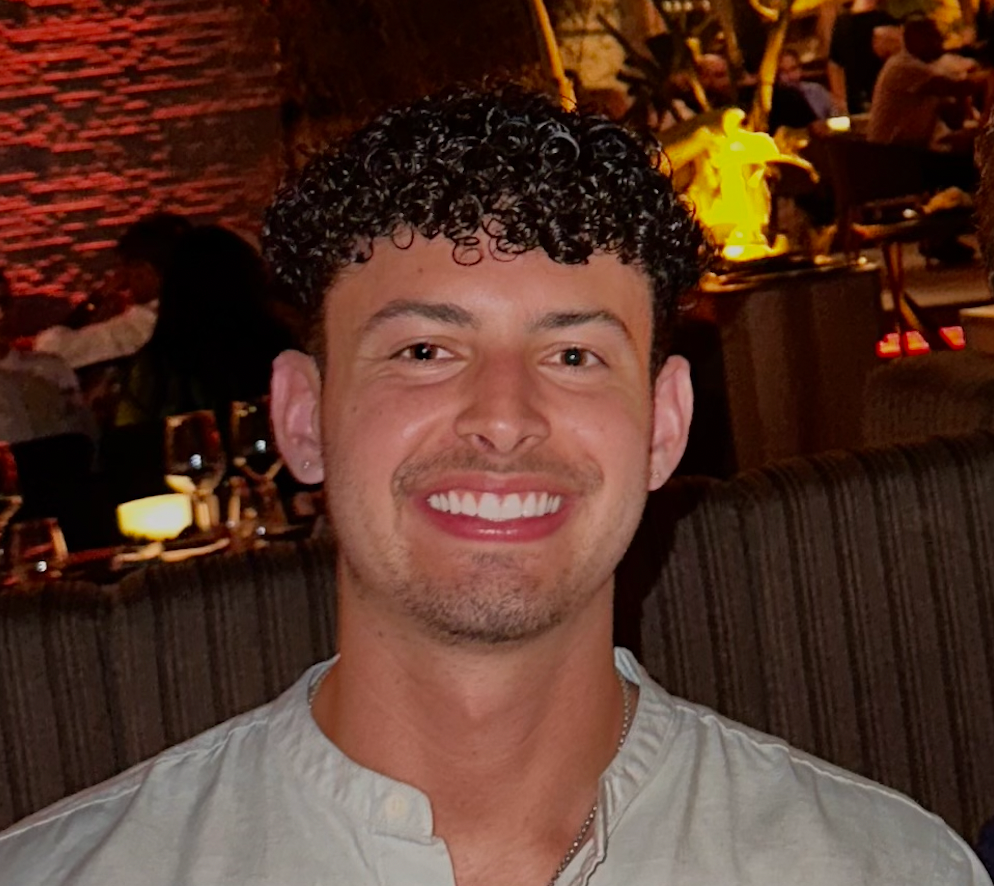


Written by Chris Hernandez

The test-optional trend in college admissions is reversing. Dartmouth, Georgetown, MIT, and Yale are reinstating SAT requirements or moving test-flexible. Here's why Miami students should still take the SAT—even when it's optional.
For three years, colleges moved test-optional. Students thought, ""Great, I won't take the SAT."" Now we're seeing a reversal. Dartmouth reinstated test requirements. MIT went test-flexible (strongly encouraged, not required). Yale emphasizes test scores in admission decisions.
The reasons are complex: colleges realized that test-optional policies actually increased bias (wealthier students still submit scores, creating a proxy for wealth). They wanted data to rebuild enrolling classes fairly. The result: scores matter more now than they did in 2023.
Miami students who skipped the SAT thinking it wouldn't matter are now behind. If you're entering junior year thinking test-optional means you can skip the SAT, reconsider immediately.
This is the real reason Miami students should take the SAT: scholarships. Merit-based scholarships (not need-based aid) depend heavily on test scores. Florida schools use SAT scores to determine Bright Futures eligibility, scholarships, and need-based aid packages.
Example: a student with a 1500 SAT might get $25,000/year in institutional aid at a private college. The same student with no submitted SAT score might get $15,000/year, even with identical GPA. The test score signals academic strength to financial aid offices.
Amikka students have earned over $25M in total scholarships, and SAT scores were the differentiator in most cases. Skipping the SAT isn't saving time—it's leaving money on the table.
Bright Futures scholarships are huge for Miami students. They fund tuition at Florida colleges and come with GPA/test score benchmarks. To qualify for the highest Bright Futures level (Florida Academic Scholars), you need a 1410+ SAT (roughly) and a 4.0+ GPA.
Even if you're shooting for a college in California, demonstrating Bright Futures eligibility shows academic strength in your profile. Florida colleges using the benchmark? You need that score.
Skip the SAT, and Bright Futures eligibility becomes harder. That's not optional.
Some Miami students think, ""My essay is strong, my GPA is 4.0, so I don't need the SAT."" Here's reality: admissions officers compare applications across contexts.
A GPA of 4.0 from a rigorous Miami private school (Belen, Ransom Everglades, St. Thomas Aquinas) signals different things than a 4.0 from a Miami public school, which signals different things than a 4.0 from online school. SAT scores normalize these contexts.
When you submit an SAT score, admissions officers think, ""Okay, this student doesn't just have a high GPA at a certain school—they actually perform well on a standardized, comparable measure."" It's the credential that proves the GPA isn't inflated.
Without it? They have to wonder. With it? They know.
Here's a tactical insight: in 2026, fewer students will submit SAT scores at test-optional schools because students still think test-optional means ""don't test."" This is changing, but it's still true.
If you submit an SAT score at a test-optional school, you're in the minority. If your score is strong, that distinction helps. Admissions officers see that you chose to submit the score—it signals confidence and preparation.
Miami students taking the SAT in a test-optional context aren't disadvantaged. They're advantaged.
Admissions research shows that colleges genuinely treat test scores differently at test-optional schools. Some weight them equally with GPA and essays. Some weight them 50% of other factors. But almost all look at them if submitted.
What's interesting: the absence of a score can be read as a weakness. If a student has a strong GPA, good essays, and no SAT score, admissions might wonder, ""Why didn't they take it? Did they score low and hide it?""
This bias isn't fair, but it's real. The safest play for Miami students: take the SAT, do your best, and submit a strong score. If the score is weak, then you can consider not submitting at truly test-optional schools. But skipping it entirely? That's not a strategy.
Most Miami students don't think about this, but SAT scores can help later. Some graduate schools (law, medical) look at undergraduate SAT scores as part of application evaluation. A strong SAT also indicates readiness for standardized tests like the LSAT or MCAT.
Getting the SAT done well in junior year isn't just about college admission. It's psychological preparation for the academic rigor ahead and proof to yourself that you can handle standardized testing.
Our Miami students are split. Some are taking the SAT strategically (targeting top scores to maximize scholarship potential). Others are hesitating, thinking test-optional means they can skip it.
The first group is winning. They're getting into top schools with stronger scholarship packages. The second group is closing doors. We're actively counseling Miami families not to assume test-optional means opt-out.
Here's how Miami students should approach test-optional schools in 2026: Take the SAT. Aim for a score that aligns with the middle 50% of admitted students at your target school (usually published on the college's website).
If you hit that target, submit. If you exceed it, definitely submit. If you miss it significantly, then you can consider the test-optional option. But you won't know if you missed it until you've tried.
Don't wait for a college to say, ""We need your SAT."" Take it proactively. Get a diagnostic. Prep strategically. Target a strong score. Submit it.
Test-optional doesn't mean SAT-optional. It means you have a choice. Make the choice to take it, do it well, and you've maximized your admission and scholarship odds. That's the Miami student advantage in 2026.
Amikka Learning is helping dozens of Miami students capitalize on this shift. Our tutors score in the top 1%, our AI-adaptive platform tracks improvement precisely, and our personalized approach gets results. Contact us to build your SAT strategy in a test-optional (but score-preferring) world.
Schedule a free SAT diagnostic consultation with Amikka Learning. In 2026, taking the SAT strategically gives you a competitive edge in admissions and scholarship awards. Let's build your action plan.
Christopher Hernandez, the founder of Amikka Learning, couldn't afford expensive SAT tutoring so he spent hundreds of hours studying on his own.
After
improving over 400 points and attending an Ivy League school he realized how unfair
the playing field was with tutoring: no matter how smart you were, if you couldn't
afford tutoring you were stuck.
His dream was to change this.
He began
tutoring for the SAT and quickly realized that he was a gifted tutor. His students
were loving his program and improving very fast.
Fast forward 8 years, Amikka
is a leader in the education industry and has helped thousands of students get into
their dream schools.
If you'd like a free consultation for 1-on-1 tutoring
schedule a call with our team here.

No contracts. Affordable
SAT and ACT prep.
 Free Consultation

Our programs give students access to something that 99% of high schooler's will never
have ...
A team of lvy League coaches who specialize in getting students into
their dream schools. Why? So they can ultimately achieve their highest potential--no
matter who they are or where they come from.
We offer a spectrum of SAT and
ACT learning experiences with different layers of personalization and accountability
in order to find the best fit for our students and their learning styles.