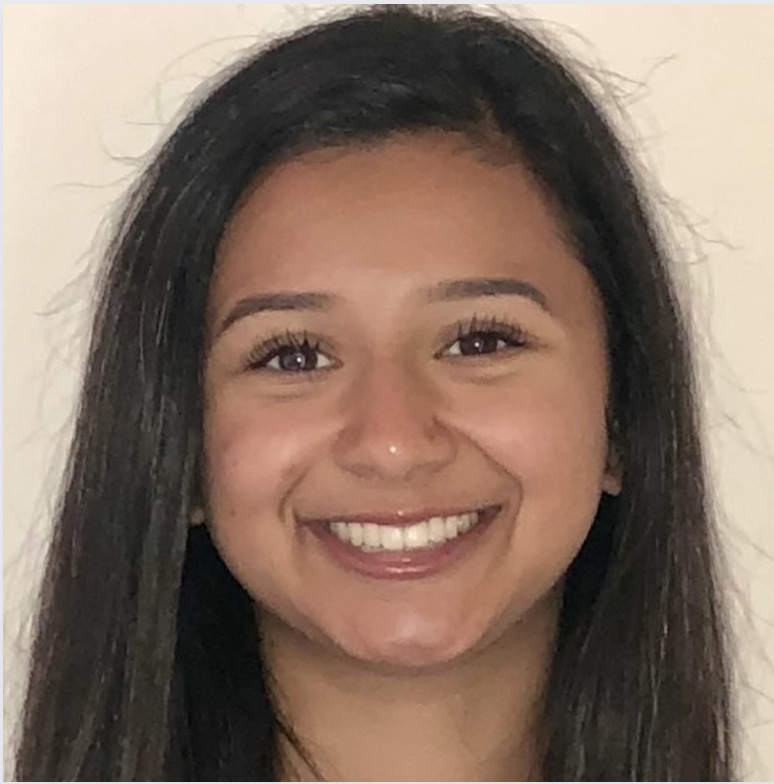


Written by Chris Hernandez

Walking into the SAT without a score prediction is like running a race without knowing your pace. A reliable estimate helps you set realistic goals, decide whether you're ready to test, and identify which sections need the most work in your final weeks of prep.
The Digital SAT uses adaptive scoring, which means your performance on Module 1 determines the difficulty of Module 2. Understanding this system helps you predict your score more accurately than simply counting right answers.
The Digital SAT is scored on a 400-1600 scale, with 200-800 for Reading/Writing and 200-800 for Math. Each section has two modules. If you perform well on Module 1, you get a harder Module 2 — which gives you access to higher scores. If you struggle on Module 1, Module 2 is easier but caps your maximum score lower.
Your raw score (number of correct answers) is converted to a scaled score using College Board's equating tables. These tables vary by test form, but practice tests give you a reliable approximation.
Take a full-length official College Board practice test under timed conditions. Score it using the answer key and raw-to-scaled conversion table provided with each practice test. These tables are specific to each test form and account for the adaptive structure.
Your scaled score from official practice tests is the most accurate predictor of your real test performance. If you've taken multiple practice tests, average your last three scores for the most reliable estimate.
Don't just look at your total score — dig into the subsection data. If your Reading/Writing is 650 but your Math is 550, that 100-point gap is your biggest opportunity. Most students can improve their weaker section faster than pushing an already-strong section higher.
Look at question-type breakdowns too. Are you losing points on algebra, geometry, or advanced math? On craft and structure, or information and ideas? This granular analysis shapes your study plan.
The biggest mistake is testing under non-standard conditions — no timer, checking your phone, or taking breaks between sections. Your practice score is only predictive if you simulate real testing conditions exactly.
Another common error: averaging a score from three months ago with a recent one. Your most recent 2-3 practice tests are what matter. Old scores reflect old preparation levels.
Amikka Learning's digital platform goes beyond basic practice tests. Our AI analyzes your performance across hundreds of question types, tracks improvement velocity, and generates a predicted score range based on your current trajectory. Your tutor uses this data to adjust your study plan in real time.
This means you always know where you stand — and exactly what to focus on next.
Want a precise SAT score prediction? Start with a free Amikka diagnostic — our AI platform will estimate your score and show you where your points are hiding.
Christopher Hernandez, the founder of Amikka Learning, couldn't afford expensive SAT tutoring so he spent hundreds of hours studying on his own.
After
improving over 400 points and attending an Ivy League school he realized how unfair
the playing field was with tutoring: no matter how smart you were, if you couldn't
afford tutoring you were stuck.
His dream was to change this.
He began
tutoring for the SAT and quickly realized that he was a gifted tutor. His students
were loving his program and improving very fast.
Fast forward 8 years, Amikka
is a leader in the education industry and has helped thousands of students get into
their dream schools.
If you'd like a free consultation for 1-on-1 tutoring
schedule a call with our team here.

No contracts. Affordable
SAT and ACT prep.
 Free Consultation

Our programs give students access to something that 99% of high schooler's will never
have ...
A team of lvy League coaches who specialize in getting students into
their dream schools. Why? So they can ultimately achieve their highest potential--no
matter who they are or where they come from.
We offer a spectrum of SAT and
ACT learning experiences with different layers of personalization and accountability
in order to find the best fit for our students and their learning styles.